You want to tell how you feel, but you don’t know how and when. You keep thinking about it, and it weighs heavily on your heart. Read on for tips and encouragement when you want to tell the truth, but you know it might hurt the other person.
Disclaimer: This is not medical advice. I am talking about minor issues between people in a healthy relationship or friendship that can unnecessarily turn into big issues when we stop communicating.

Most women master the art of the “silent treatment” quite well. We stop talking, so the other person must notice something’s wrong. And he or she must feel it too.
But when we stop communicating, we’ve already decided the other person should’ve treated us better and is no longer worth communicating with.
How to communicate when you’re upset
My first advice would be to stop and pray. If you feel like you can’t be kind and willing to listen, you might be getting too emotional.
Ask the Lord to guide you, give you wisdom, and show you if there is anything you did that might be standing in the way of resolving the issue.
Only by pride…
A very powerful verse to remember when you’re trying to resolve a conflict can be found in the book of Proverbs:
“Only by pride cometh contention: but with the well advised is wisdom.” Proverbs 13:10
This verse speaks about pride and contention in the same sentence. And it says that only by pride cometh contention. So, where there’s contention (Webster’s Dictionary speaks about “strife”, “quarrel”, “struggle”), it seems two people don’t agree, and one or both parties are prideful.
Do you feel like someone wronged you, or should have treated you better? Maybe you find the other person “should have known”, or knows how you feel about a certain issue, and shouldn’t have brought it up. But what you’re actually saying is: “I deserve to be treated better”.
It’s always good to examine yourself first. Maybe you are the one who has pride issues you were unaware of, but those need to be dealt with first.
Another perspective
Instead of feeling like you deserve better, it’s better to acknowledge that pride can stand in the way of a healthy relationship and really isn’t worth ending a friendship over.
It is good to note here that there may be times when someone hurts you, and that was indeed unnecessary, clumsy, or just plain rude, and the other person was the only one who was “wrong”. But pride feeds bitterness, and you’ll want to avoid that at all costs.

Grace seasoned with salt
There’s always a chance that someone was truly unaware of the impact of his or her action(s). Maybe he or she truly didn’t realize the impact it would have on you.
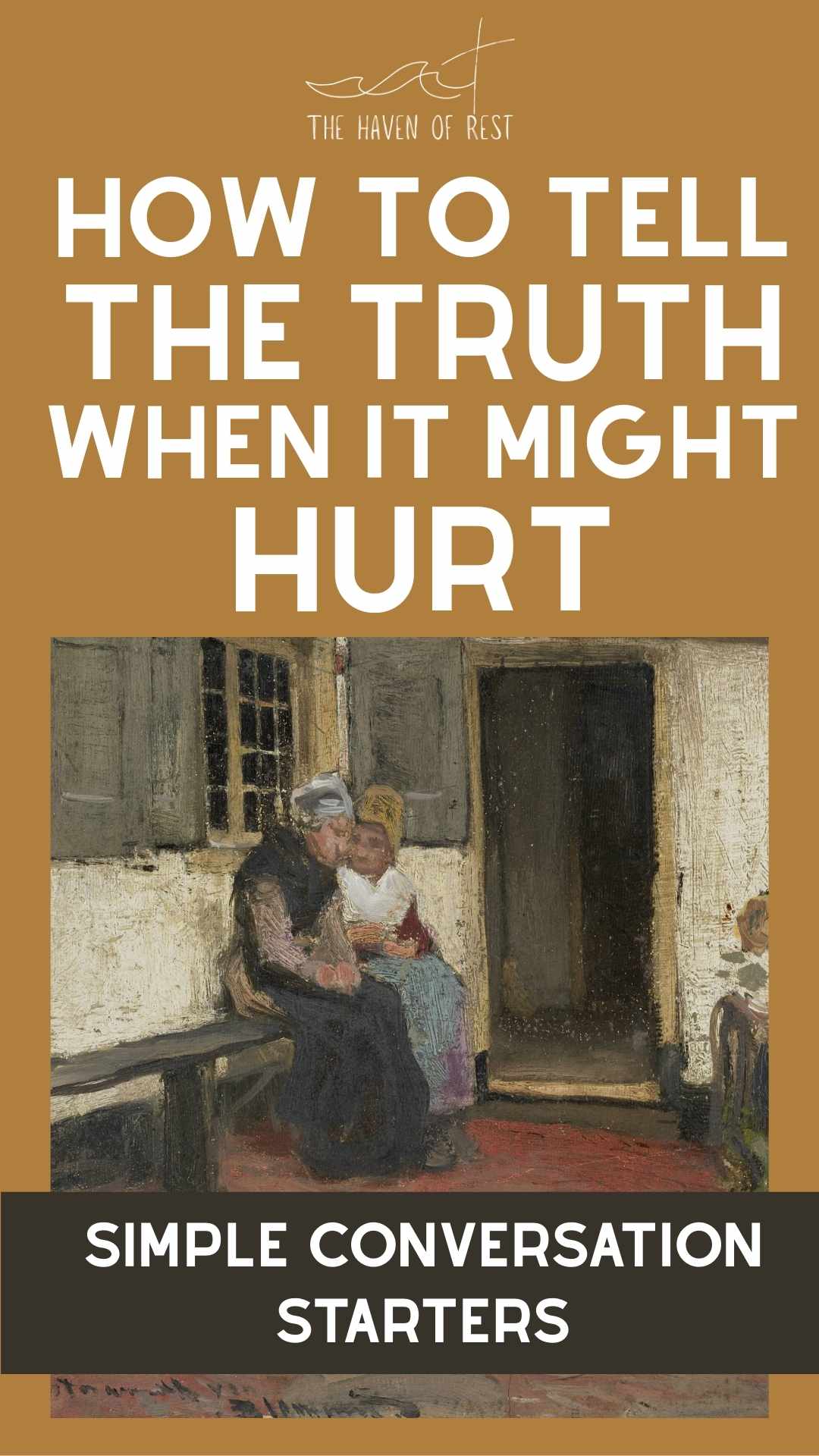
That’s why it’s good to communicate what it did or felt like for you. Here are some sample conversation starters when you want to tell someone the truth about how you feel:
“I want to share with you something that’s been on my heart about…”
“Do you have a moment to talk about …?”
“Maybe you haven’t realized it, but I felt very… by what you said …”
“I feel bad for saying this, but I would have appreciated it when you…”
Usually, the hardest part is starting the conversation. Once you start, you can go back and forth and hear both sides of the story. This will help clear things up.
Save for Later
Hover over the image & use the Pinterest button to save this to your Pinterest board
When you don’t want to hurt someone
Sometimes God asks us to do hard things. And in the case of addressing something that might hurt the other person, that can be really hard.
But staying silent and not saying anything might be even worse. Sometimes there may be a blind spot that we need to address, gracefully.
I want to conclude by saying that sometimes you need to tell the truth. In love and with the other person’s best interest in mind. Even when it might hurt, it is far better than not saying anything.
“Faithful are the wounds of a friend; but the kisses of an enemy are deceitful.” Proverbs 27:6